
When AI Determines Strategy: Turning Algorithms Into Real Decisions
How teams actually use AI in strategy, moving from dashboards to decisions, spotting early signals, and turning models into measurable outcomes without...
Updated March 31, 2026

Your competitors are flooding the market with AI-generated content. So are you. So is everyone. The question isn't whether AI is changing creative marketing — it already has. The question is whether you're using it to stand out or just adding to the noise.
AI is changing modern workflows in many areas, and creative marketing is no exception. Already, sophisticated products and services integrate AI tech into marketing workflows. Business leaders need to keep up with the state of the art in AI to maintain their competitive edge.
The marketing landscape has evolved dramatically in the past year, with AI tools enabling capabilities that previously seemed out of reach for all but the largest organizations. Small teams can now produce content at volumes that rival much larger operations.
Looking for a Artificial Intelligence agency?
Compare our list of top Artificial Intelligence companies near you
However, this democratization of content creation brings both opportunities and significant challenges.
The key question isn't whether to adopt AI for marketing — that ship has sailed — but how to implement it strategically while preserving what makes your brand unique and valuable to customers.
Lasting strategic advantage will come not from thoughtlessly following whatever the wind blows but from carefully assessing the advantages and disadvantages of adopting specific AI tools for particular needs and workflows. Especially in creative marketing, there remains a vital place for the human touch.
This cautions against an overreliance on AI tools and the AI dependency that can quietly develop when teams automate too much, too fast. Striking the right balance will put you well-placed to succeed in the age of AI.
The potential advantages of integrating AI into creative marketing workflows should not be understated. Here are some of the promises AI offers for leaders in marketing:
The more you can tailor your marketing materials to individual customers, the more effective they will be. But you can't make a unique ad campaign for each person, right? Well, this is rapidly becoming possible with AI.
Consider how this plays out in practice: A regional retail chain can now create thousands of personalized email campaigns that reference local events, weather patterns, and even individual purchase history — all automatically generated and deployed without manual intervention for each variant.
What previously would have required dozens of copywriters and designers can now be accomplished by a team directing AI tools with the right strategic inputs and oversight.
AI tools help your workflows run faster and more efficiently. This isn't about unlocking new capabilities but about optimizing existing ones. Human creatives bring a personal touch and perspective, but they cannot match the speed of an AI system. AI efficiency drives down both the speed and costs of marketing workflows.
AI-forward marketing teams report significant productivity gains in tasks such as drafting social media content, generating initial design concepts, and creating SEO-optimized blog outlines.
This doesn't mean replacing creative professionals — rather, it means elevating their work by handling the repetitive aspects of content creation so they can focus on strategy, refinement, and innovative thinking that truly differentiates a brand.
Modern marketers know that reliable data and analytics are the best tools for assessing campaign effectiveness and adjusting strategies moving forward. AI holds great promise in this area by absorbing far more data than any human could learn in a lifetime. AI tools might uncover insights in your analytics that were previously overlooked.
Furthermore, predictive analytics powered by AI can forecast market trends and consumer behavior patterns with increasing accuracy.
By analyzing vast datasets from multiple sources — social media sentiment, search trends, purchase patterns, and even macroeconomic indicators — these systems can help marketing teams anticipate shifts in consumer demand before they become obvious, providing a crucial competitive advantage in fast-moving markets.
As with any new opportunity, there are new risks. AI technologies have limitations and shortcomings. Failing to mind these will inevitably result in costs, errors, and other challenges:
Current frontier AI systems learn from almost every piece of online information. They know more facts than any individual human could ever learn. But they lack a lived experience, a personal voice, and a human perspective.
This genericity problem manifests in several ways. AI-generated content often lacks the cultural nuance, emotional intelligence, and authentic storytelling that resonates with audiences on a deeper level. And authenticity is crucial, as 97% of consumers say it matters when deciding whether to support a brand.
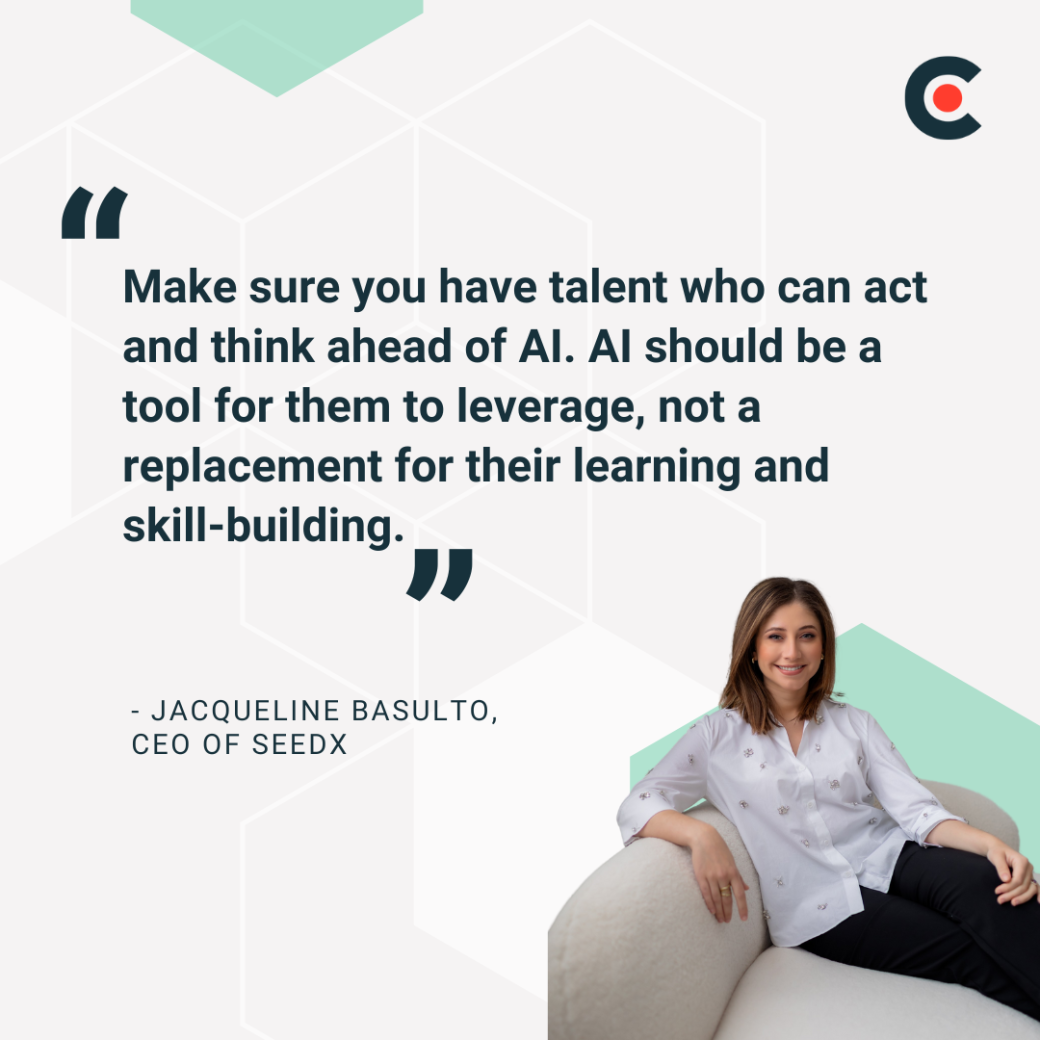
“Make sure you have talent who can act and think ahead of AI. AI should be a tool for them to leverage, not a replacement for their learning and skill-building,” says Jacqueline Basulto, CEO of SeedX.
Consumers have become increasingly savvy at detecting content that feels templated or lacks genuine human insight.
Many brands have learned this lesson the hard way with campaigns that technically checked all the marketing boxes but failed to create meaningful connections with their target audiences.
Craig Brommers, Chief Marketing Officer at American Eagle, recently sounded a warning about the dangers of falling into the "generic creative" trap:
“What I worry about is the potential for generic creative. I think that some very big brands—I won’t name them—have used AI creativity in their recent campaigns and gotten blasted.”
To avoid this pitfall, people need to remain closely involved in developing and reviewing creative marketing materials.
Even the best AI systems today make boneheaded errors: They "hallucinate." An AI system might get something as basic and important as the name of your new service wrong in an ad campaign. AI dependency makes this risk worse — teams that have outsourced their judgment to AI tools may not even catch the errors when they appear.
Without human oversight of these AI outputs, your brand reputation could be in serious trouble. While AI systems can pump out work quickly, it's best to have people check any important AI work twice for hallucinations.
This quality control issue also impacts the use of AI systems for data-driven insights. AI systems can quickly absorb vast amounts of data. But if a specific number produced by an AI analytics tool is very important, you should double-check that figure and make sure the AI system uses a reasonable, accurate process to arrive at it.
Both quality control issues and generic "AI slop" can negatively impact your biggest asset—your brand's reputation. Errors that seem to result from a lack of human care and attention are particularly upsetting to customers. You don't want your customers to think you are letting AI take the wheel and ceding all human insight and expertise.
The damage from the misuse of AI in marketing can be swift and significant. Social media platforms amplify missteps, turning minor errors into viral examples of AI gone wrong. Brands perceived as using AI solely for cost-cutting rather than to deliver better customer experiences often face backlash from customers and industry peers.
In addition, it must be acknowledged that many people remain opposed in principle to using AI for creative work. Different customer segments will have different concerns, but the reality is that you may lose some consumer support, particularly for heavy reliance on AI tools in creative marketing work.
Some opposition to the use of AI in creative work stems from important ethical concerns. Here are some relevant considerations that ethicists and others have raised about these uses of AI systems:
As AI becomes more advanced, potential ethical issues will likely increase.
The newest AI systems are powerful tools in the marketer's toolbox, but like any other tool, they are not all-purpose. They have particular benefits and drawbacks that must be carefully assessed in each use case.
The promises of these AI tools include more personalized marketing content at scales greater than ever before, faster, more efficient marketing workflows, and greater value from your data and analytics. But to effectively take advantage of these benefits, you must avoid the pitfalls of generic AI content resulting from the loss of human touch, quality-control issues caused by AI hallucinations, and the negative impact on brand reputation from overreliance on AI.
Businesses should also consider the many ethical concerns about AI tools for creative work and how they apply to their situation, including AI training materials, the potential loss of human skills like creativity and critical thinking, and the effects of AI automation on the job market.
By maintaining a measured approach that gives people a central place and uses AI as a complement rather than a replacement, you will strike the right balance to avoid the view from nowhere, catch AI errors, and preserve your brand's valuable reputation.